
How Thriving PMOs Leverage Technology and Data Analytics for Better Decision-Making
As part of our How to Build a PMO That Thrives series, this article explores how modern PMOs use technology and data to drive performance, visibility, and strategic decision-making.
In today’s fast-changing, data-rich environment, thriving PMOs do more than track progress. They use real-time insights to anticipate challenges, optimise delivery, and demonstrate value to executives. Technology and analytics are no longer optional; they are the foundation for a data-driven PMO that operates with agility and confidence.
Below, we outline practical ways to leverage technology and data analytics to enhance PMO efficiency, transparency, and impact.
Implement robust PPM tools
If not already in place, a modern Project and Portfolio Management (PPM) platform is essential. Tools such as pmo365, Planview, or Jira Align enable real-time tracking of project status, risks, and resources across the portfolio.
These platforms create a single source of truth, breaking down silos and providing everyone, from team members to executives, with appropriate visibility into project progress. For many organisations, moving to an integrated, cloud-based PPM tool has significantly improved visibility, prioritisation, and governance at the executive level.
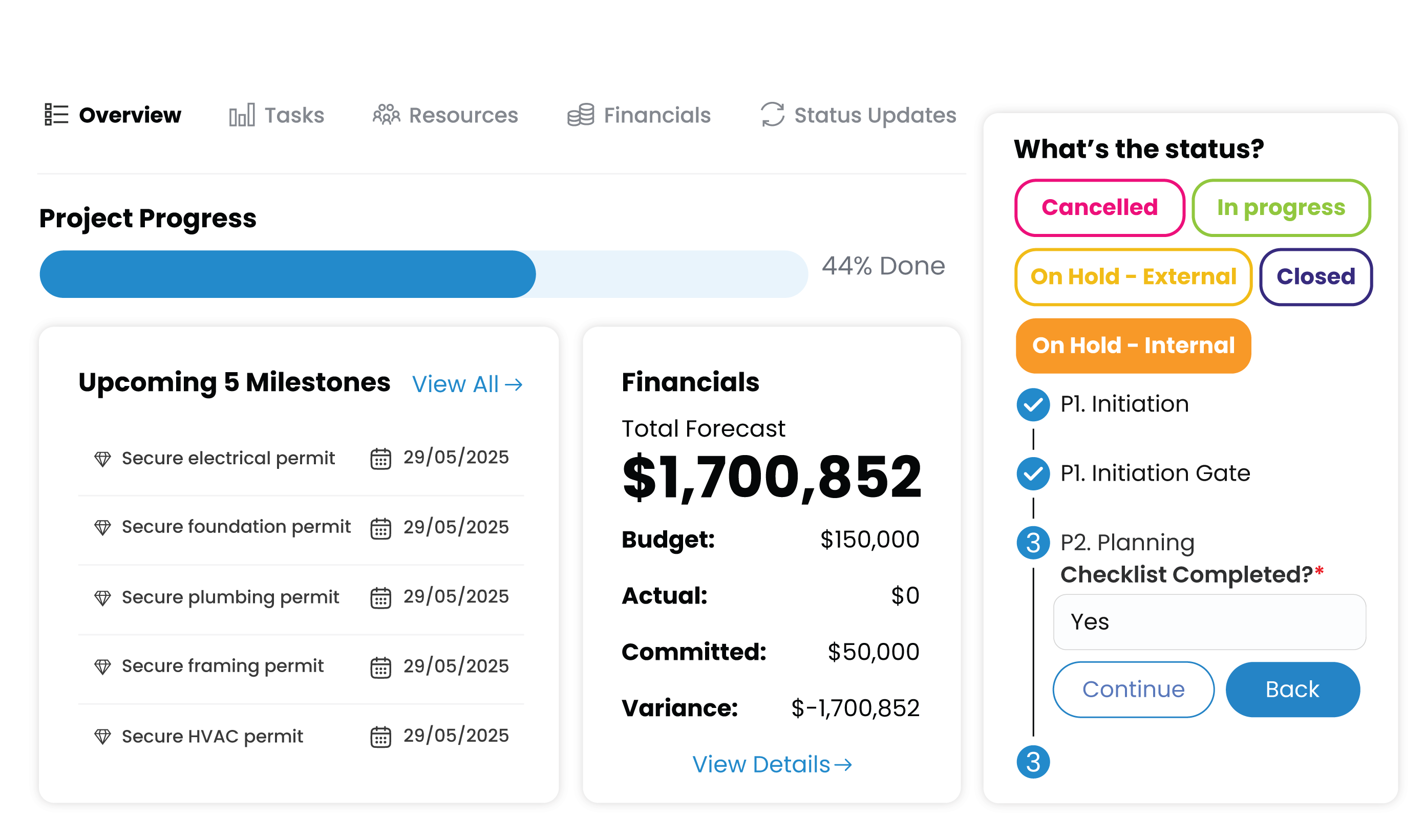
Automate dashboards and reporting
Thriving PMOs provide tailored dashboards and reports that deliver the right level of insight for each stakeholder. Executives may need portfolio-level health metrics and milestone tracking, while project managers benefit from detailed task and variance reports.
Automation ensures dashboards are updated in real time, reducing manual report preparation and the potential for human error. By automating reporting, PMO analysts can spend less time compiling data and more time interpreting results, identifying risks, and supporting informed decision-making.
Use data analytics and predictive insights
With a rich history of project data, PMOs can move beyond reactive reporting to proactive insight generation. Analysing past project trends can reveal recurring issues, such as consistent cost overruns in particular project types or delays at certain lifecycle stages, allowing the PMO to take preventive action.
Leading PMOs are now using predictive analytics and artificial intelligence to forecast project outcomes. These tools can predict which projects are likely to experience delays, identify risk factors that most affect delivery, and highlight where resource constraints are developing.
Industry analysts forecast that an increasing number of organisations will adopt AI-driven project analytics in the coming years. A PMO that embraces this capability can flag issues earlier, allocate resources more intelligently, and guide strategic planning with confidence.
Adopt resource management systems
Effective resource management is one of the most persistent challenges in project delivery. Modern PPM tools now include resource management modules that provide visibility into capacity, allocation, and potential conflicts.
By leveraging these systems, PMOs can optimise workloads, anticipate bottlenecks such as overbooked specialists, and work proactively with management to rebalance priorities before issues arise. Despite the clear value of these systems, less than half of PMOs currently lead resource management initiatives, and even fewer use dedicated software, presenting a major opportunity for improvement.
Enable collaboration and knowledge sharing
Collaboration and knowledge-sharing tools such as Confluence, SharePoint, and Microsoft Teams help project teams stay aligned and informed, especially in hybrid or distributed work environments.
The PMO can maintain a central knowledge repository that includes templates, guidelines, lessons learned, and best practices. This ensures that knowledge from past projects is retained, shared, and applied to new initiatives, reducing duplication and improving delivery speed.
Focus on metrics that matter
Technology is most powerful when it helps the PMO demonstrate measurable business value. Instead of only tracking project outputs, such as completed deliverables, integrate your PPM platform with core business systems to track outcomes like cost savings, revenue growth, or improved customer satisfaction.
For example, connecting project dashboards to financial or customer systems can show how successful delivery correlates directly with business KPIs. When a PMO can clearly link project performance to outcomes such as a 5 per cent increase in customer retention or a measurable uplift in revenue, its strategic value becomes evident.
Summary: The PMO as a data-driven enabler
Technology is an enabler that allows PMOs to manage complexity, scale effectively, and make faster, smarter decisions. It empowers PMO teams to consolidate data, identify insights, and act on them with speed and precision.
However, technology alone is not the answer. The PMO must ensure that its tools align with strategic objectives and that people are trained and engaged in using them. Proper adoption, integration, and ongoing change management are what transform technology into genuine business advantage.
By combining the right systems with skilled, data-literate professionals, the modern PMO becomes more than a governance function. It evolves into a strategic partner that enables the organisation to deliver value faster, with greater confidence and control.