The Top 5 Soft Skills for a Successful PMO Leader
As PMO leaders, we can get lost in our focus on achieving results. Oftentimes, this means we rely on our technical knowledge to complete our responsibilities. However, we shouldn’t underestimate the importance of soft skills in a PMO leader. These critical skills are as important as technical hard skills, and maintains positive results and culture in your PMO.
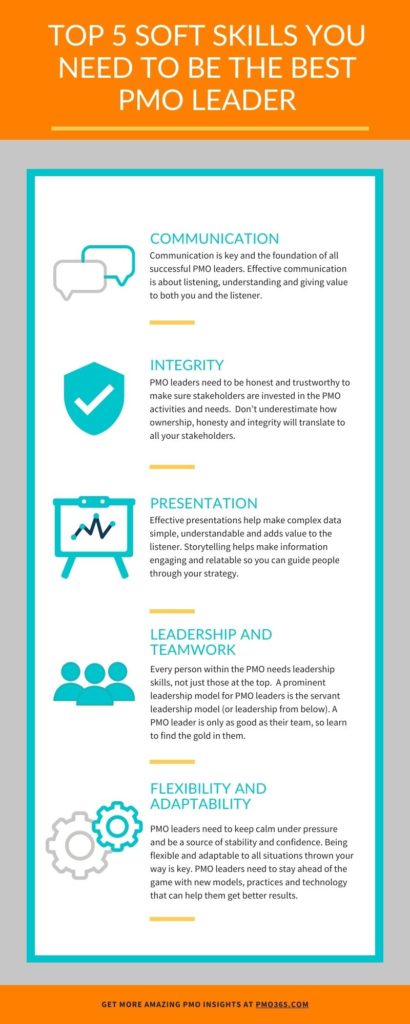
Here’s our list of the top 5 soft skills for a successful PMO leader.
1. Communication is key to be a great PMO leader
The phrase “communication is key” isn’t new, but that simple truth forms a solid foundation for every successful PMO leader. The job of a PMO leader is to coordinate people, both across the organisation and outside it. This includes communicating with stakeholders, sharing your vision with your PMO, and organising contractors and suppliers if necessary.
There’s a bit more to effective communication than sharing information. Being a good communicator is about giving value to the other people in the conversation. The best way to do that is quite simple- by listening.
Becoming an effective communicator involves listening carefully. This skill ensures you understand the information which is being shared. At the same time, you can filter what information adds value to you or the other person. Listening actively is a skill that is developed with time and experience, but is well worth the effort.
How to develop this skill: Practice listening, while ensuring everyone in the conversation understands the topic. As you’re listening, ask yourself, “How is this adding value to the both of us?”
2. Integrity builds foundations for your PMO
While working in PMO may feel like a numbers game, achieving results with integrity can encourage a more productive PMO.
Trust and honesty are critical to effective PMOs. As the overarching coordinator within the business, PMO leaders should inspire trust in employees and stakeholders. Employees should know that PMO leaders are making decisions with integrity, while utilising honest and fair processes. As a result, the organisation will hold PMO leaders accountable for the commitments they make. This builds the stakeholder’s trust in the PMO leader, as they know the PMO are working for the best interests of the organisation.
When this isn’t the case, stakeholders may choose to withhold critical information. This can lead to a breakdown of communication in the organisation, and the rise of costly blind spots when coordinating projects.
Peter Taylor, in Leading Successful PMOs, states that a key challenge of the PMO is convincing the organisation to buy into its functions and needs. PMO leaders should ensure all stakeholders are invested in the PMO, as well as stakeholders genuinely believe in the PMO initiative.
Don’t underestimate how ownership, honesty, and integrity can translate to stakeholders. As people increase in their trust in you, they have increased trust in the PMO. This intrinsically increases your effectiveness at achieving long-lasting results.
How to develop this skill: Remember is not just what you do, but how you do it. It’s all about building trust.
3. Presentations matters as a PMO leader
It’s hard to convince others that you have great ideas and data without presenting it effectively. Linking back to communication and organisational buy-in, good presentations make the audience listening believe in what you’re presenting. Ideally, presentations should make complex data simple, so the listener can understand the value of it.
A shortcut to creating effective presentations is storytelling.
Storytelling is about being engaging and relatable. This gives you the platform to guide people through necessary information. Most stakeholders won’t understand the value of the raw data of the PMO, or the strategies which govern its activities. Through storytelling, PMO leaders can guide people through their vision and strategy. They can adapt their information to add value to the listeners, and create necessary trust in the PMO.
Becoming a good presenter may also require some additional hard skills. This can include data visualisation and presentation making, which a basic proficiency in Excel and Powerpoint will cover. The core focus of a presentation, however, should be presenting data which gives your audience the most value.
How to develop this skill: Think from your listeners perspective and build a story. This story should shows them the benefit of the PMO for them.
4. Leadership and Teamwork is Essential to every PMO leader
As the strategic hub for a business, every role within the PMO needs leadership skills. So, PMO members need to work in a way that builds credibility in the PMO.
Every person within the PMO is an extension of the PMO, its activities, and its potential. If a member of the PMO doesn’t have leadership skills or enthusiasm about collaboration, it doesn’t reflect well on the PMO.
It’s a classic case of leading by example. A prominent leadership model which could best serve PMO leaders is the ‘servant leadership model’. This model puts the needs of employees and organisation first. As a result, it develops the organisation from the bottom up. It’s a very effective way of building trust and credibility with stakeholders, and with the employees you work with.
By extension, teamwork is the heartbeat of successful PMOs. As the PMO focuses on bringing out the best in teams, projects and resources, collaboration is a crucial skill.
People are your biggest assets as a PMO leader. Learn to identify people’s talents, and to navigate different personalities. This will allow tension points to foster further collaboration and creativity. A genuine focus on people allows you to bring the best out of people, generating the best results.
How to develop this skill: Lead by example and you’ll see – it’s contagious! Your team is your biggest asset, so start by finding the gold in them.
5. Flexibility and Adaptability keeps the best PMO leaders ahead
Successful PMO leaders need to be able to keep calm under pressure. The key qualities of being flexible and adaptable assist with keeping calm. As our world and regulations change daily, these skills are absolutely necessary.
As the strategic hub of the business, PMO leaders need to be a source of stability and confidence. By being ready to adjust to new situations, understand new variables, and creating new solutions, you can be a successful PMO leader.
However, being flexible and adaptable isn’t limited to situational contexts. The PMO itself is always changing, so there won’t be a bandaid solution every time things go astray. This is particularly true when new models, practices, or technology is involved.
By adapting to changes, you can get ahead of the game. Embrace change, and always be ready to learn new ways of becoming more effective.
How to develop this skill: Keep your options open. Maintain wide view of different variables so you can shift tracks when you need to!
Become a Successful PMO Leader
Want to start putting words into action? We’ve built a free downloadable Project Manager Skills Development Checklist so you can take real steps to become a successful PMO leader. Be sure to check out other blogs to further develop your skills and knowledge of the functioning of the PMO.